

Third-Party Inspections for Electrical Equipment
Third-party inspections for electrical equipment: independent verification that switchgear, transformers, and control panels meet design specs and safety standards — before energization, not after.
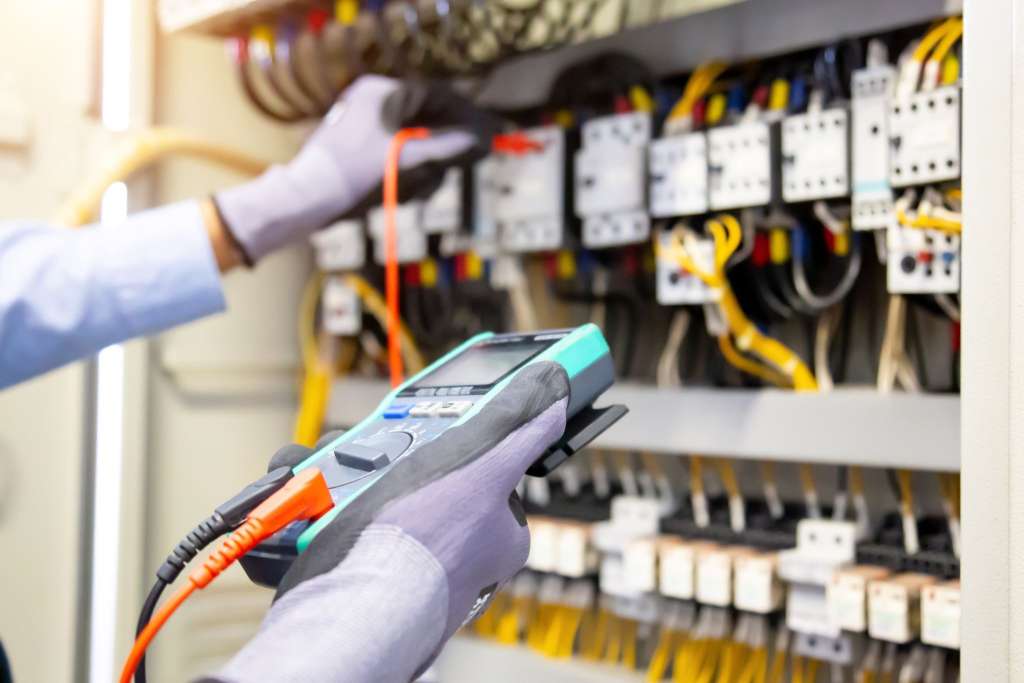
Third-party inspections for electrical equipment play a critical role in ensuring switchgear, transformers, and control panels meet both industry standards and project-specific requirements. When procuring high-value power infrastructure such as switchgear, transformers, or control panels, defects that slip through are far more expensive to fix after delivery.
Independent inspections add an impartial verification layer that neither the manufacturer nor the buyer can replicate alone. They protect project timelines, reduce commissioning risk, and give engineers documented confidence in what they are receiving.
What inspectors evaluate
Their scope goes well beyond a standard manufacturer test — moving from the paperwork, to the physical build, to live electrical performance.
Technical design & documentation compliance
The evaluation begins with a meticulous audit of the “paper trail” to ensure engineering intent matches regulatory requirements. Every nameplate detail — voltage ratings, serial numbers — is checked for precision, and the Bill of Materials is audited against the purchase order so no lower-grade components were substituted during assembly.
- Standards · ANSI, IEEE, IEC
- Data accuracy · nameplate & serials
- Procurement · BOM vs. PO
Physical build integrity & craftsmanship
Once the design is validated, focus shifts to construction. Inspectors examine the frame and enclosures for durability and finish, scrutinize cable sizing, lug configurations and conduit entries, and pay particular attention to bus bar alignment and electrical clearances — preventing arcing and ensuring grounding and bonding can handle fault currents.
- Structural · frame & enclosures
- Wiring · sizing, lugs, conduit
- Clearances · bus bar & bonding
Functional performance & electrical testing
The most rigorous phase proves the equipment performs under stress. Tools measure insulation resistance and dielectric withstand so the system won’t fail at high voltage, while control sequences, HMI accuracy and alarm triggers are verified to give operators total control in a crisis.
- Dielectric · resistance testing
- Logic · HMI & alarms
- FAT · simulated run
When third-party inspections for electrical equipment should occur
A single checkpoint is rarely enough for complex power equipment. The most effective programs integrate verification across the full lifecycle — five chances to catch a problem before it gets more expensive.
Design & drawing review
Single-line diagrams, protection coordination and layout drawings reviewed before anything is built — the earliest, most overlooked checkpoint.
EARLIESTIn-process manufacturing
Factory visits verify raw materials, assembly adherence, weld quality and tolerances. Problems found mid-build are far cheaper to resolve.
FACTORYFactory Acceptance Test
The customer witnesses full functional testing before shipment. No unit should leave without a completed, signed FAT report.
MILESTONEPre-shipment & receiving
Packing confirmed to reduce transit damage, then arrival condition and shipping documentation verified on site.
TRANSITSite Acceptance Test
Once installed, the SAT validates field performance, system integration and protection settings under real load.
ON-SITEHow verified quality reduces commissioning risk
Energizing equipment that hasn’t been properly verified invites delays, damage, and safety incidents. Early detection is the lever.
The cost of rectifying an error climbs sharply as a project progresses. This concept — the Rule of Ten — holds that a defect becomes significantly more expensive to fix at each subsequent stage. By pushing discovery into the factory, third-party inspectors ensure equipment arrives on site ready for immediate integration.
The longer a defect hides, the more it costs
Relative cost to fix the same defect, by the stage at which it’s caught.
Illustrative of the Rule-of-Ten principle. The same error at commissioning can mean specialized labor, emergency shipment of parts, and extensive downtime.
Caught early
An error identified during design review or initial fabrication typically requires only a drawing update or a minor component swap.
Caught late
Persisting until site commissioning, it may require specialized labor, emergency parts, and extensive downtime.
Independent documentation & asset handover
Neutrality is the primary value of a third-party report. Because the inspector has no stake in manufacturing speed or the sale, their documentation is an objective baseline for all stakeholders. Reports enter the permanent asset record — vital for EPC firms to prove contractual obligations, and the deciding factor for insurers and manufacturers in warranty or liability disputes. Many grid authorities also require independent verification before connection to the public utility.
Faster, more reliable commissioning
A site team is only as efficient as the hardware it receives. When equipment is pre-verified, commissioning shifts from a “troubleshooting” exercise to a “verification” one — engineers focus on system integration instead of debugging faulty wiring or relay settings. Projects with rigorous third-party FAT see fewer “dead-on-arrival” incidents, more consistent milestones, and avoid the heavy liquidated damages tied to utility delays.
Verified quality isn’t optional on critical power projects.
Whether you’re procuring a modular substation, switchgear assembly, transformer, or battery energy storage system, our team builds the right inspection plan from day one — with third-party inspections standard in every delivery.
Discuss your inspection requirements →